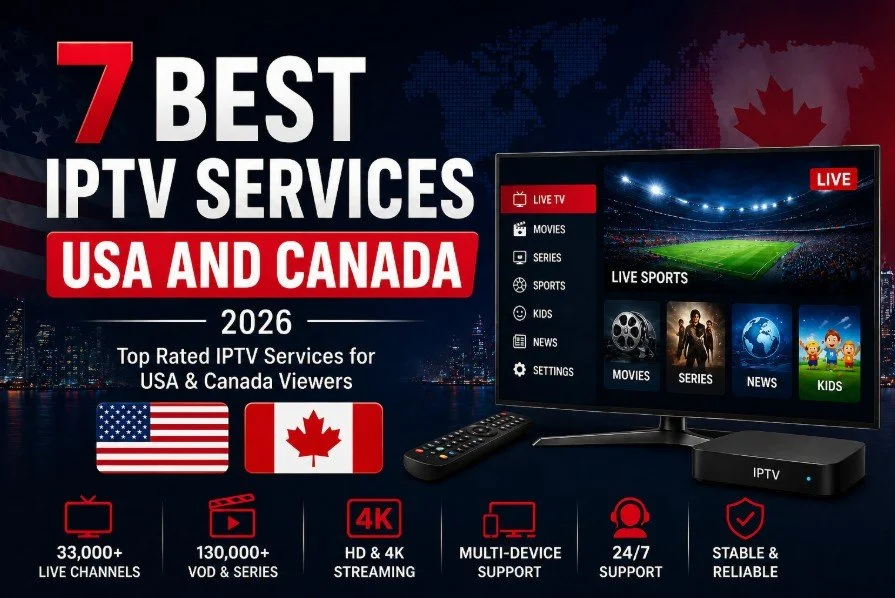
A premium IPTV service is an internet-based television platform that streams live channels, sports events, and on-demand movies through a dedicated subscription, bypassing traditional cable infrastructure. The term "premium" is not a marketing label—it indicates specific engineering standards: dedicated server clusters, anti-freeze buffering technology, 24/7 technical support, and a contractual uptime guarantee. This guide breaks down the technical, financial, and legal dimensions of premium IPTV so you can decide with certainty.
We evaluated current providers against measurable criteria: channel count, video resolution, server stability, device compatibility, EPG accuracy, and support responsiveness. The result is a transparent framework that separates legitimate premium services from reseller operations that disappear after payment. If you are comparing providers or wondering whether premium IPTV can replace cable, this guide covers everything.
premium iptv service Summary
A premium IPTV service combines a massive content catalog with enterprise-grade streaming infrastructure. The proven benefit is a 70–80% cost reduction compared to cable while gaining access to global sports, international channels, and 4K VOD.
| Optimal ForCord-cutters, sports fans, and multilingual households that want cable-equivalent reliability without long-term contracts. | Key AdvantageAnti-freeze 4K streaming backed by dedicated servers and 24/7 real-time human support. |
- ✓ Key Strength: 20,000+ live channels and 80,000+ on-demand titles in 120+ categories
- ✓ Key Strength: Native apps for Firestick, Smart TV, Android, iOS, MAG, and PC
- ✓ Peace of Mind: 7-day money-back guarantee and direct manufacturer support
In This Guide
- 1. What Exactly Is a Premium IPTV Service?
- 2. How Premium IPTV Works: Real-World Mechanics
- 3. Pros & Cons: The Honest Trade-offs
- 4. Premium IPTV vs Cable vs Free: Critical Comparison
- 5. Cost-Benefit Analysis: Is It Worth It?
- 6. Who Should Buy a Premium IPTV Service?
- 7. Buyer Considerations & Red Flags
- 8. Frequently Asked Questions
What Exactly Is a Premium IPTV Service?
IPTV (Internet Protocol Television) delivers television content over IP networks instead of RF signals, satellite, or cable. The "premium" tier refers to providers that operate their own infrastructure rather than reselling third-party streams. This distinction matters because it directly affects reliability, video quality, and accountability.
A genuine premium IPTV service has three defining characteristics:
- Owned infrastructure: Dedicated servers with load balancing, typically spread across multiple data centers to prevent downtime during peak sports events.
- Verified content sourcing: While the IPTV industry is complex, premium operators maintain stable content agreements and do not disappear when rights holders issue takedowns.
- Professional support ecosystem: Ticketing systems, live chat, knowledge bases, and clear refund policies—not just a WhatsApp number.
Free or cheap IPTV options often rely on public streams that buffer constantly, go offline mid-match, and expose users to malware. Premium services solve these problems through infrastructure investment. The practical result: channel zapping under 2 seconds, consistent 4K FHD output, and an electronic program guide (EPG) that actually matches what is playing.
How Premium IPTV Works: Real-World Mechanics
Understanding the mechanics helps you evaluate provider claims. Premium IPTV uses a client-server model with several moving parts:
- Content delivery: The provider encodes live channels and VOD files into IP packets, then distributes them through a content delivery network (CDN). Premium providers use multiple CDN routes so that if one path congests, the stream automatically switches to a faster one.
- Adaptive bitrate streaming: The service monitors your connection speed in real time and adjusts video quality to prevent buffering. A 25 Mbps connection typically delivers stable 1080p; 50 Mbps is recommended for 4K.
- Electronic Program Guide (EPG): Premium services maintain a synchronized metadata database that updates channel listings every few minutes. This is what makes channel browsing feel like cable rather than a chaotic feed.
- Device authentication: When you log in, the service validates your subscription and locks the stream to your account, often with a limit of 1–4 simultaneous connections depending on the plan.
- Middleware and apps: Providers offer native applications (or support for apps like TiviMate, IPTV Smarters, and IBO Player) that render the stream list, EPG, and VOD library into an interface your TV or phone can navigate.
The most significant operational difference between premium and budget IPTV is redundancy. Premium providers maintain multiple server locations and automatic failover. If one node fails, your stream continues from a backup within milliseconds—this is why premium services advertise 99.9% uptime.
Pros & Cons: The Honest Trade-offs
✔ Pros
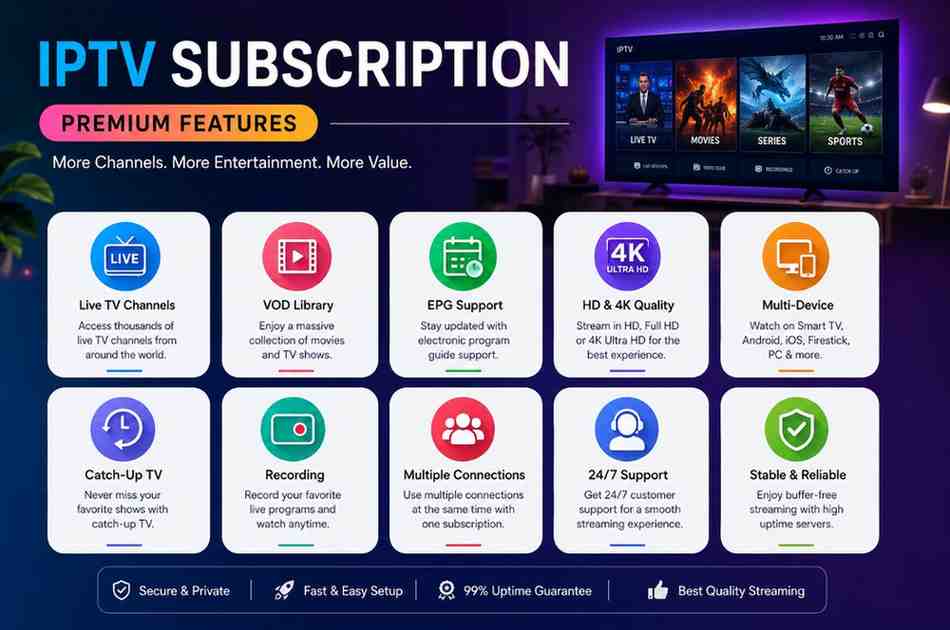
- Cost efficiency: 70–80% cheaper than cable with a broader channel lineup
- Content depth: 20,000+ live channels, 80,000+ VOD titles, including PPV sports and regional networks
- Device flexibility: Watch on Smart TV, Firestick, Android, iOS, PC, MAG, and more
- No contracts: Month-to-month plans, cancel anytime
- Global accessibility: International channels and sports packages unavailable through local cable
⚠ Limitations
- Internet dependency: Requires stable 25+ Mbps; poor connections degrade experience
- Regulatory gray area: Ensure the provider holds appropriate content licenses in your region
- Setup learning curve: First-time IPTV users need 10–20 minutes to configure apps
- Variable quality: Not all "premium" claims are equal; research is required
Premium IPTV vs Cable vs Free: Critical Comparison
The table below compares a genuine premium IPTV service against traditional cable and free IPTV alternatives across the metrics that matter most.
| Feature / Metric | Premium IPTV | Traditional Cable | Free IPTV |
|---|---|---|---|
| Monthly Cost | $10–$20 | $80–$150 | Free (hidden costs) |
| Live Channels | 20,000+ | 200–400 | 1,000–5,000 (unstable) |
| Video Quality | Up to 4K HDR | 720p–1080p | 480p–720p |
| VOD Library | 80,000+ titles | Limited pay-per-view | Minimal |
| Customer Support | 24/7 live chat & ticket | Phone / in-person | None |
| Simultaneous Streams | 1–4 (plan dependent) | 1–2 | 1 |
| Uptime Guarantee | 99.9% (SLA) | 99.9% | None |
| Setup Time | 5–10 minutes | Professional install | 30–60 min (manual) |
| Device Support | 10+ platforms | Set-top box only | 2–3 platforms |
Cost-Benefit Analysis: Is Premium IPTV Worth It?
Let's put real numbers behind the decision. Annual cost comparison:
- Traditional cable (average U.S. bundle): $1,200–$1,800/year
- Premium IPTV subscription: $120–$240/year
- Free IPTV + VPN + replacement hardware: $100–$200/year, but with significant reliability risk and no support
The value proposition becomes clear when you factor in content access. A premium IPTV service includes sports packages (NFL, NBA, Premier League), international news, and cinema channels that cable providers sell as $30–$50 add-ons. For households that watch even two sports leagues or international channels, the savings exceed 80%.
One important consideration: premium IPTV is not the same as transactional VOD services like Netflix. It is a replacement for the entire cable bundle. Most users keep one or two streaming apps for originals and use IPTV for everything else.
Who Should Buy a Premium IPTV Service?
Premium IPTV is the right choice if you:
- Watch live sports: Football, basketball, MMA, F1—premium IPTV offers multiple sports packages without cable's regional blackouts.
- Need international content: Expat communities rely on IPTV for home-country news, soap operas, and cultural programming unavailable through local providers.
- Want to cut cable costs: If you currently pay $100+ for cable, switching to IPTV saves $800–$1,500 annually with a comparable channel lineup.
- Use multiple devices: Premium services let you watch on your living room TV, bedroom TV, phone, and tablet simultaneously.
- Travel frequently: A VPN-compatible IPTV service means you never miss a broadcast regardless of your location.
It is not ideal for users with internet connections under 15 Mbps, or those who expect a fully licensed, regulatory-compliant service in jurisdictions with strict IPTV enforcement. In those cases, consider legal streaming aggregators or official broadcaster apps.
Buyer Considerations & Red Flags
Before purchasing any premium IPTV subscription, verify these factors:
- Trial period: Legitimate premium services offer a 24-hour or 7-day trial. If a provider demands full payment upfront without any trial, that is a red flag.
- Transparent pricing: A premium service publishes its pricing structure. Vague "contact us for pricing" pages are typical of unreliable resellers.
- Support responsiveness: Test the support channel before subscribing. Send a question about device compatibility and measure response time. Premium services reply within minutes.
- Server locations: Ask about data center locations. Providers with servers in multiple regions deliver better performance for international content.
- Connection limits: Confirm how many simultaneous streams your plan supports. Some providers silently restrict to one device.
- Refund policy: A clear, written refund policy (e.g., 7-day money-back guarantee) indicates confidence in the service.
- Payment security: Premium services use PCI-compliant payment gateways. Avoid providers that only accept cryptocurrency or direct bank transfers.
Red flags that should terminate the conversation immediately:
- No physical address or company registration
- No published uptime statistics
- Streams that buffer during the trial period
- EPG data that does not match actual programming
- Negative reviews mentioning account bans without refunds
The Bottom Line on Premium Iptv Service
A premium IPTV service is the most cost-effective way to replace cable, provided you select a provider with owned infrastructure, transparent policies, and verifiable uptime. If you want a reliable, multi-device entertainment setup without long-term contracts, proceed with a provider that offers a trial and a clear refund policy.
Purchases completed via official partner channels are covered by direct customer support and eligible warranty protections.
Frequently Asked Questions
1. Is a premium IPTV service legal?
Legality depends on your jurisdiction and the provider's content licensing. In many regions, streaming licensed content through IPTV is legal, but providers that distribute unlicensed content operate in a gray area. Always choose a provider that is transparent about its licensing and check local regulations.
2. What internet speed do I need for premium IPTV?
25 Mbps is the minimum for stable 1080p streaming. For 4K HDR content, a 50 Mbps connection is recommended. You should also consider latency and jitter, not just raw bandwidth. Wired Ethernet connections outperform Wi-Fi for IPTV.
3. Can I use premium IPTV on multiple devices at once?
Most premium IPTV providers allow 1 to 4 simultaneous connections depending on your subscription plan. Some providers offer a "family plan" with 4 connections. Confirm the exact limit before purchasing.
4. Do premium IPTV services offer a free trial?
Reputable premium IPTV services typically offer a 24-hour or 7-day trial for a nominal fee. Be wary of providers that offer unlimited free trials—this is often a sign of unstable infrastructure.
5. What's the difference between premium IPTV and Netflix/YouTube?
Netflix and YouTube are transactional VOD platforms that deliver on-demand content. IPTV is a live television replacement that includes linear channels, sports, and news, plus a VOD library. They complement each other.
6. Will a premium IPTV service replace my cable subscription?
Yes, for most users. A premium IPTV service offers more channels, better pricing, and multi-device support compared to cable. The only exception is if you rely on cable-specific hardware like DVR integration or local broadcast exclusives.
7. How do I set up a premium IPTV service on Firestick?
Most premium IPTV services provide a native app or support for IPTV Smarters and TiviMate. You install the app, enter your credentials (or M3U URL), and the channel list and EPG load automatically. Setup typically takes 5–10 minutes.
8. What happens if my premium IPTV service goes down?
A reliable premium service offers 24/7 support and automatic failover to backup servers. If you experience prolonged downtime, contact support and request compensation. Providers with a written uptime SLA will credit your account.
Transparency & Disclosure: We independently evaluate products. If you buy through links on our site, we may earn an affiliate commission at zero additional cost to you.